

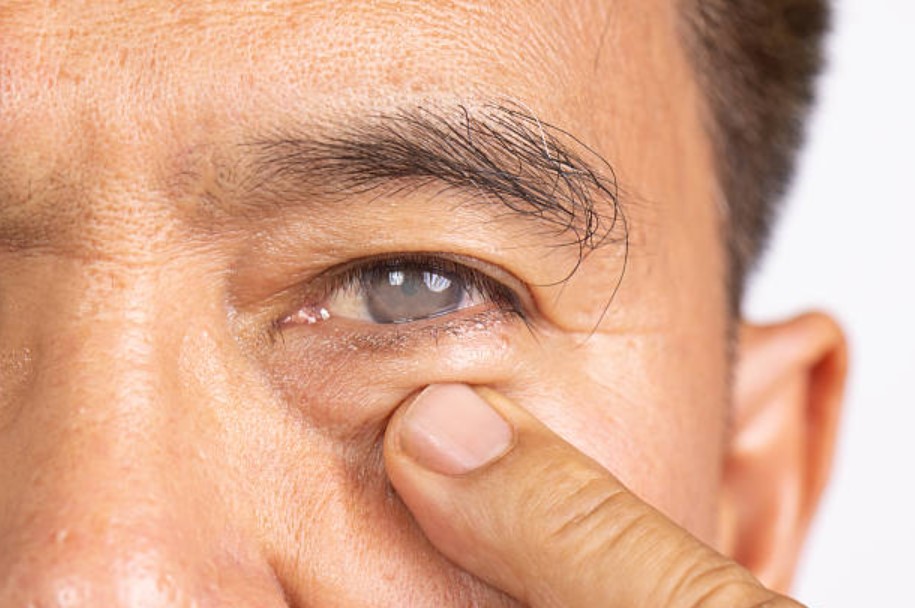
Are you considering a lens replacement surgery? One of the common side effects you’ll likely hear about is halos. They can look like glowing rings or streaks around lights, most noticeable at night.
It is natural to feel uncertain about going forward with the procedure upon hearing this. Such side effects can feel a little unsettling, especially when you want to get back to normal life as soon as possible after the surgery.
This blog explores why halos happen, how long they tend to last, and what you can do if they’re bothering you more than expected.
What Is a Lens Replacement Surgery?
A lens replacement operation, also known as refractive lens exchange (RLE), refers to a procedure in which the natural lens of the eye is replaced with an artificial one. It’s typically done to correct vision problems such as cataracts, presbyopia, or high refractive errors. This highly effective treatment not only restores clarity but also reduces dependency on glasses or contact lenses.
The surgery itself is fairly quick. Many patients are surprised by how straightforward it feels compared to what they’d imagined. Still, like with any surgical procedure, there are adjustments your eyes must make afterwards, and halos are part of that adjustment for some people.
Why Do Halos Occur?
Halos appear as glowing circles or rings around lights, especially at night. They often appear around headlights, street lamps, or even bright indoor bulbs. Many people describe them as a soft glow, almost as if the light has a hazy border instead of a sharp edge.
When you undergo a lens replacement operation, your natural lens is swapped with an artificial intraocular lens. In the early weeks, light entering the eye can scatter slightly as it adjusts to the new surface and structure. Essentially, your eye and brain are re-learning how to process these light patterns. With multifocal lenses, which bend light at different distances, halos may appear more strongly at first.
But don’t worry, halos are not a bad thing; it’s just your eyes learning a new pattern. The good news is that, for most people, these effects settle as the eyes adapt.
Factors Influencing the Duration of Halos
-
Type of Intraocular Lens
Different lenses can produce different experiences. Monofocal lenses tend to cause fewer halos, while multifocal lenses may produce stronger ones, at least initially. But patients often accept this trade-off for the benefit of clear vision both near and far.
-
Surgical Technique
A precise, careful lens replacement surgery minimises complications and ensures the lens sits exactly where it should. Even small misalignments can contribute to prolonged halos. This is one of the reasons surgeon expertise plays such a critical role.
-
Patient’s Eye Health
If the eye already has corneal irregularities, dry eye, or other conditions, halos may linger longer. Every eye is unique, and recovery can vary significantly from one patient to the next.
How to Manage Halos After Lens Replacement
-
Patience and Time
In most cases, halos improve within weeks to a few months. For some people, it’s as though the brain slowly “filters them out.” It’s not that the halos disappear entirely, but they stop being noticeable.
-
Follow-Up Care
Regular check-ups after your surgery enable your ophthalmologist to ensure that healing is progressing as expected. Sometimes, halos are associated with minor adjustments that can be corrected during follow-up visits.
-
Night Driving Caution
Halos tend to be most obvious when driving at night. Many patients find it’s worth planning short-term adjustments, including avoiding long night drives in the early recovery period, or simply giving themselves more time until vision feels more stable.
-
Eye Drops
Dry eyes can make halos worse. Prescribed lubricating drops often reduce light scatter by keeping the eye surface smooth. It sounds simple, but patients often notice immediate comfort when dryness is addressed.
Why Do You Need a Skilled Surgeon
While halos are common, their duration can be influenced by the precision of the surgical procedure. A surgeon with extensive experience in lens replacement surgery knows how to position and centre the intraocular lens with accuracy. This reduces the risk of prolonged halos and makes recovery more predictable.
At Precision Vision, we focus on both achieving clear vision and ensuring a smooth recovery. Our expert ophthalmologists are with you through every step of the process, providing the support you need to navigate any minor side effects without feeling overwhelmed.
Conclusion
Halos after lens replacement are common, especially in the first few weeks. For most patients, they fade over time or become far less noticeable as the brain adjusts. The type of lens, surgical technique, and individual eye health all contribute to the longevity of the results. With good follow-up care and the expertise of a skilled surgeon, halos are usually a temporary stage on the path to clearer, sharper vision.
If you’re considering lens replacement surgery and want to know more about the recovery process, Precision Vision is here to help. We will assess your eyes, recommend the best lens option, and guide you through the process with care every step of the way.
Call us at (07) 5612 5200 and book your appointment today. Take the next step toward a clearer, more confident vision.